Cost & Planning
How Much Does a Concrete Patio Cost in Rochester, NY?
Price-per-square-foot numbers rarely tell the whole story. Here's what really shapes a concrete patio budget in Western New York, and how to compare proposals.
By Patio North · · 5 min read
 Design inspiration
It's the first question almost everyone asks, and it's a fair one. The honest answer is that the cost of a concrete patio in the Rochester area depends far more on the specifics of your property and design than on any single price-per-square-foot figure.
Online calculators and national averages can be a starting point, but they routinely leave out the things that make the biggest difference here: base preparation for freeze–thaw conditions, drainage corrections, access to the backyard, and removal of an old patio. Two patios with identical square footage can land in very different places.
This guide walks through what actually shapes the budget, so you can plan realistically and compare proposals on equal terms.
The factors that move a patio budget
1. Size and shape
Area matters, but so does geometry. A simple rectangle is the most efficient shape to form and finish. Curves, angles, multiple levels, and lots of edge per square foot add forming and finishing time. A modest patio with complex edges can cost more per square foot than a larger, simpler one.
2. Finish and decorative work
A broom-finished gray slab is the most straightforward option. Costs rise as you add:
- Integral color or stains, which add material cost and require consistency across the pour
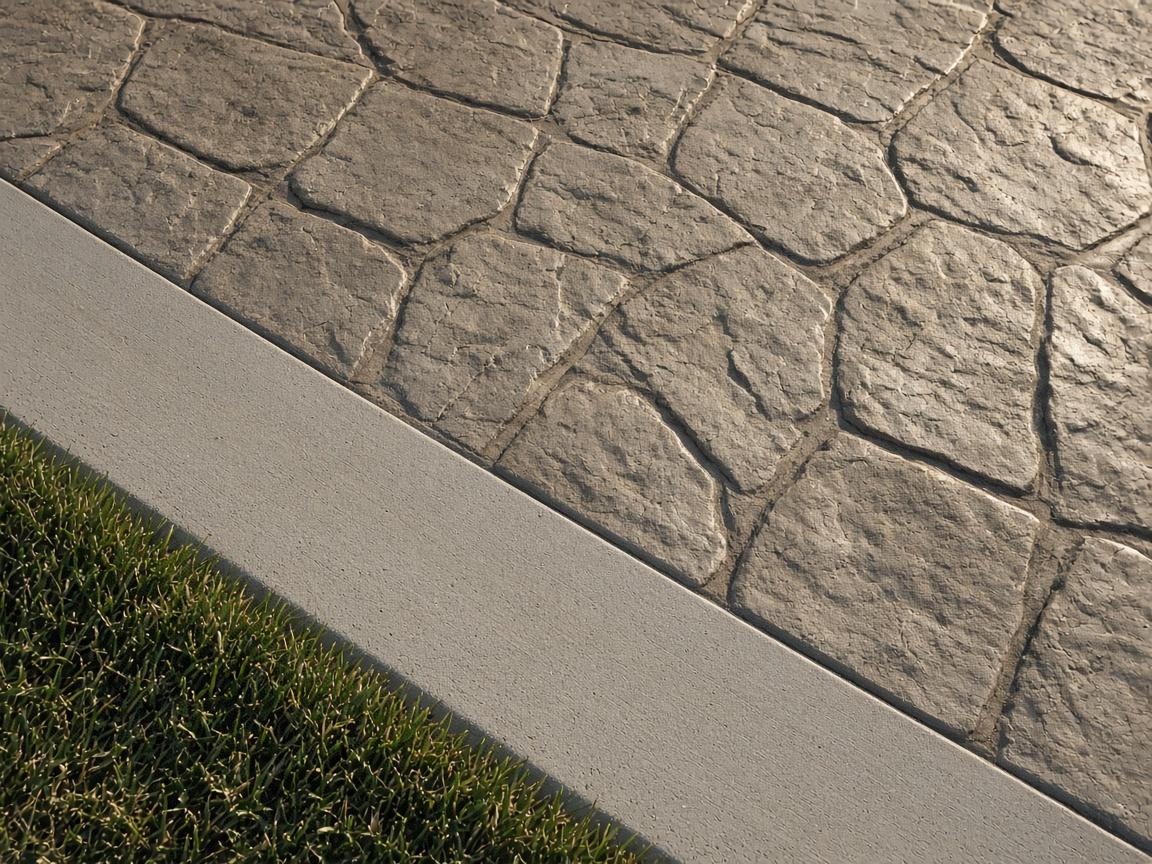
- Stamped patterns, which require more labor, more crew coordination during the pour, and sealing
- Borders, banding, and saw-cut patterns, which add detail time
- Exposed aggregate or specialty finishes
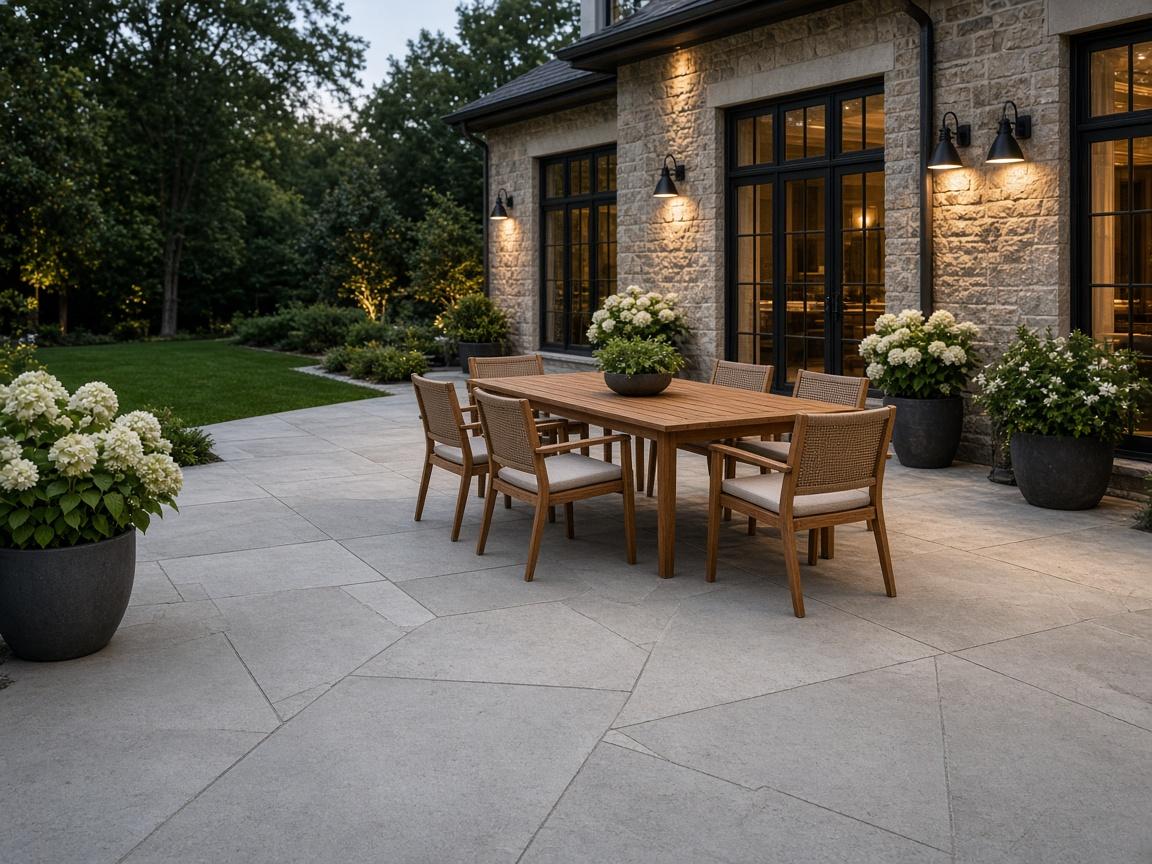
None of these are "better" by default. A well-detailed plain concrete patio with intentional joint lines can look more refined than a busy stamped pattern. The right finish depends on the house and how you want the space to feel. See our comparison of stamped concrete and pavers if you're weighing materials.
3. Base preparation
This is the part of the budget most likely to be underestimated, and the part that matters most in Western New York. A patio is only as stable as what's beneath it. Proper preparation typically means removing topsoil and organic material, establishing a compacted granular base, and confirming that the subgrade is stable.
Soft or poorly drained soils, old fill, or areas where previous construction disturbed the ground may need more excavation or base material. Skimping here is how patios end up cracked, heaved, or tilted toward the house after a few winters.
4. Drainage and grading
A patio should shed water away from your home. If your yard currently drains toward the house, or the patio location sits in a low spot, the project may need regrading, drains, or other corrections. These costs aren't optional extras; they're what keeps water out of your basement and ice off your patio. Our guide to common patio drainage problems covers this in more depth.
5. Site access
Can a concrete truck or equipment get close to the work area? If concrete can be placed directly from the truck, the job is more efficient. If it has to be pumped or moved by other means because of fences, narrow side yards, or landscaping, costs increase. Many Rochester city lots and older neighborhoods have tight access, which is worth discussing early.
6. Demolition and removal
Replacing an existing patio means breaking it out, hauling it away, and often correcting the base underneath. Removing old deck footings, walkways, or buried debris adds time as well.
7. Steps, transitions, and walls
Most patios connect to a door, deck, or walkway. Steps, landings, seating walls, and transitions to the lawn or driveway are often a meaningful share of the total budget, especially on sloped lots.
8. Planning for the future
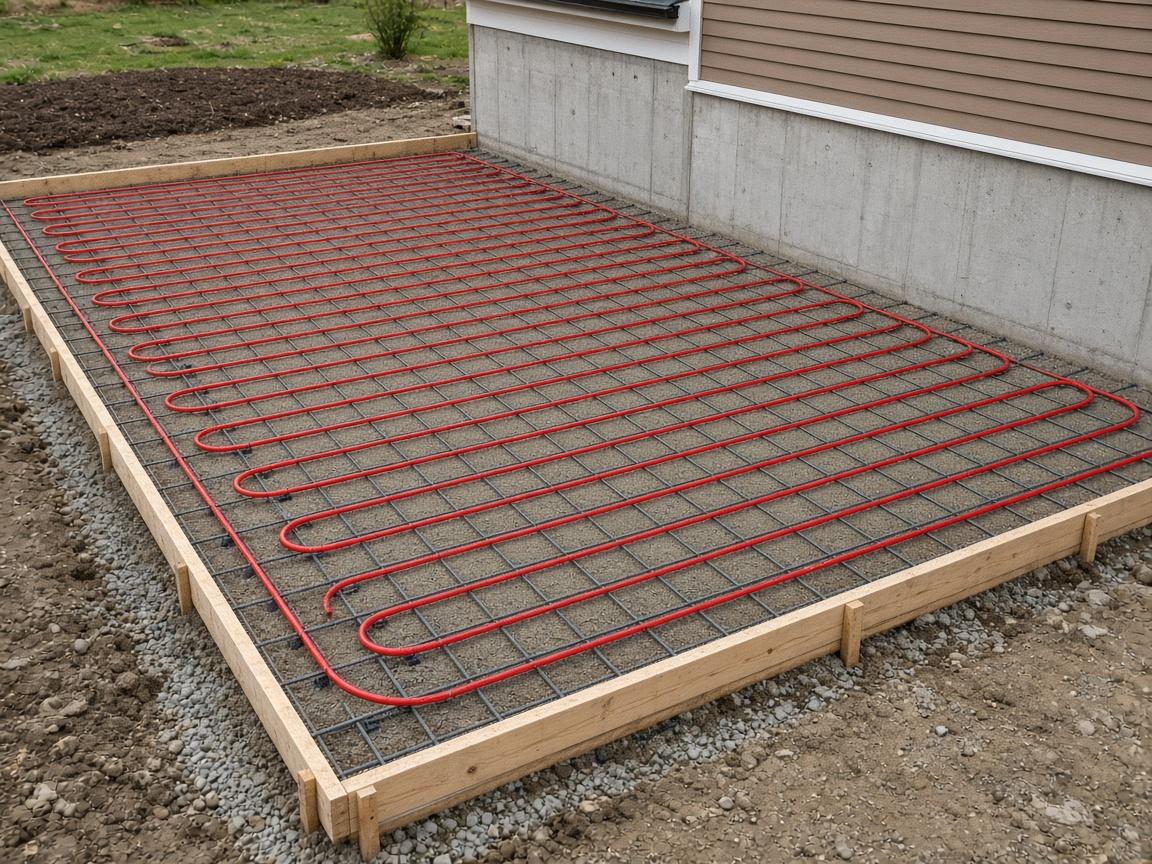
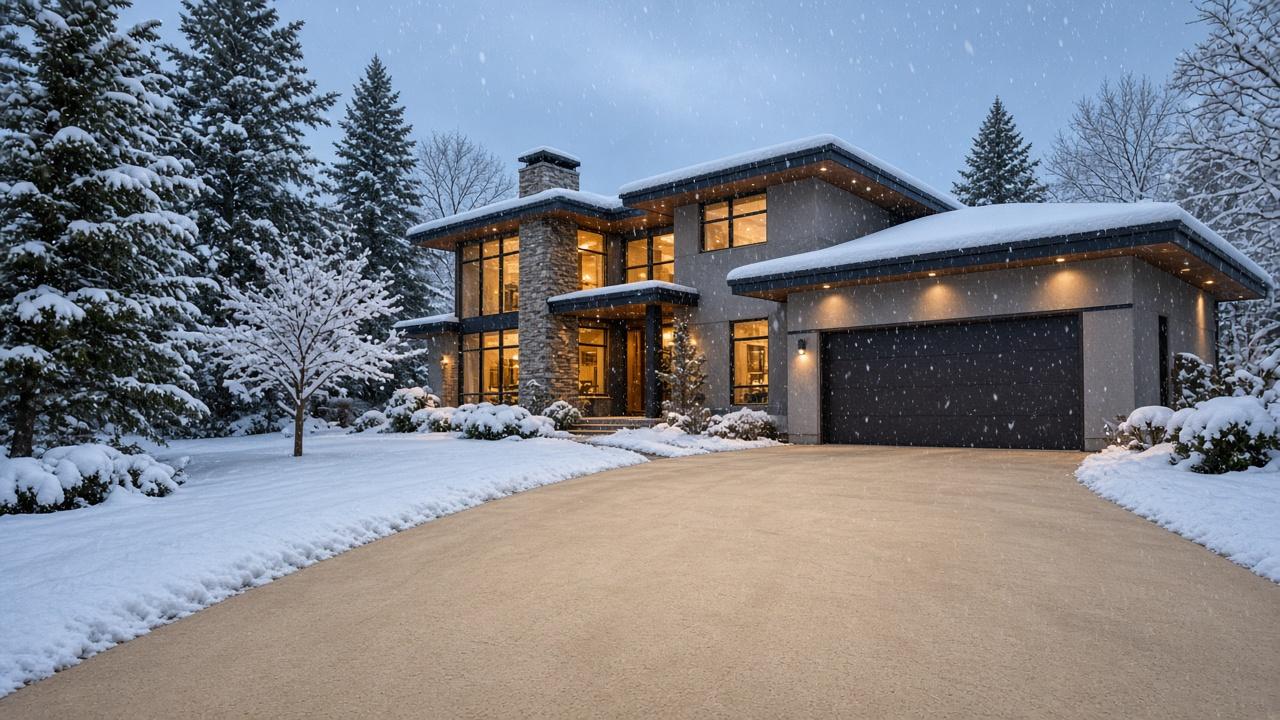
If you might add a pergola, outdoor kitchen, lighting, or a heated surface later, the cheapest time to prepare is now. Installing conduit, gas sleeves, or footings before the pour costs far less than cutting into finished concrete. If you're considering snow melting, read about electric and hydronic systems before you finalize the patio.
Why we don't publish a price per square foot
A single number without context tends to mislead in one of two ways. Either it's set low to attract calls and then climbs once the real site conditions are known, or it's padded to cover worst-case conditions that don't apply to your yard. Neither helps you plan.
Instead, we ask for a budget range early in the process. It isn't a commitment. It lets us recommend materials and a scope that make sense, and tell you plainly if the vision and the budget don't line up yet.
How to compare patio proposals fairly
When you collect proposals, line them up against the same questions:
- What is the base specification? Depth and type of base material, and how it's compacted.
- What concrete and reinforcement are specified? For freeze–thaw climates, air-entrained concrete is standard practice for exterior flatwork.
- How will the patio drain? Ask about the planned pitch and where water goes.
- Where will the joints be? A thoughtful joint layout controls where cracks occur.
- Is demolition and removal included?
- Are steps, transitions, and restoration of disturbed lawn included?
- Is sealing included, and what's recommended afterward?
- Who handles permits, if any are required?
A lower number that leaves out base work, drainage, or restoration isn't a lower price; it's a different project.
A note on timing
Concrete is best placed in moderate weather. Late fall and winter pours require additional protection, and schedules tend to fill up in spring. If you're planning a patio for next summer, the off-season is a good time to design, finalize the scope, and get on the schedule. Read more about installing concrete in a Rochester winter.
The bottom line
The cost of a concrete patio in Rochester comes down to size and finish, plus the less visible work that determines how it holds up: base, drainage, access, and transitions. The most useful thing you can do is be clear about how you want to use the space and what range you're comfortable investing. From there, a good contractor should be able to explain exactly where the money goes.
Get a realistic picture for your patio.
Tell us about your yard, the size you're imagining, and your budget range. We'll help you understand what fits.
Plan Your Project