Cost & Planning5 min read
How Much Does a Concrete Patio Cost in Rochester, NY?
Price-per-square-foot numbers rarely tell the whole story. Here's what really shapes a concrete patio budget in Western New York, and how to compare proposals.
Design inspirationCustom Patios
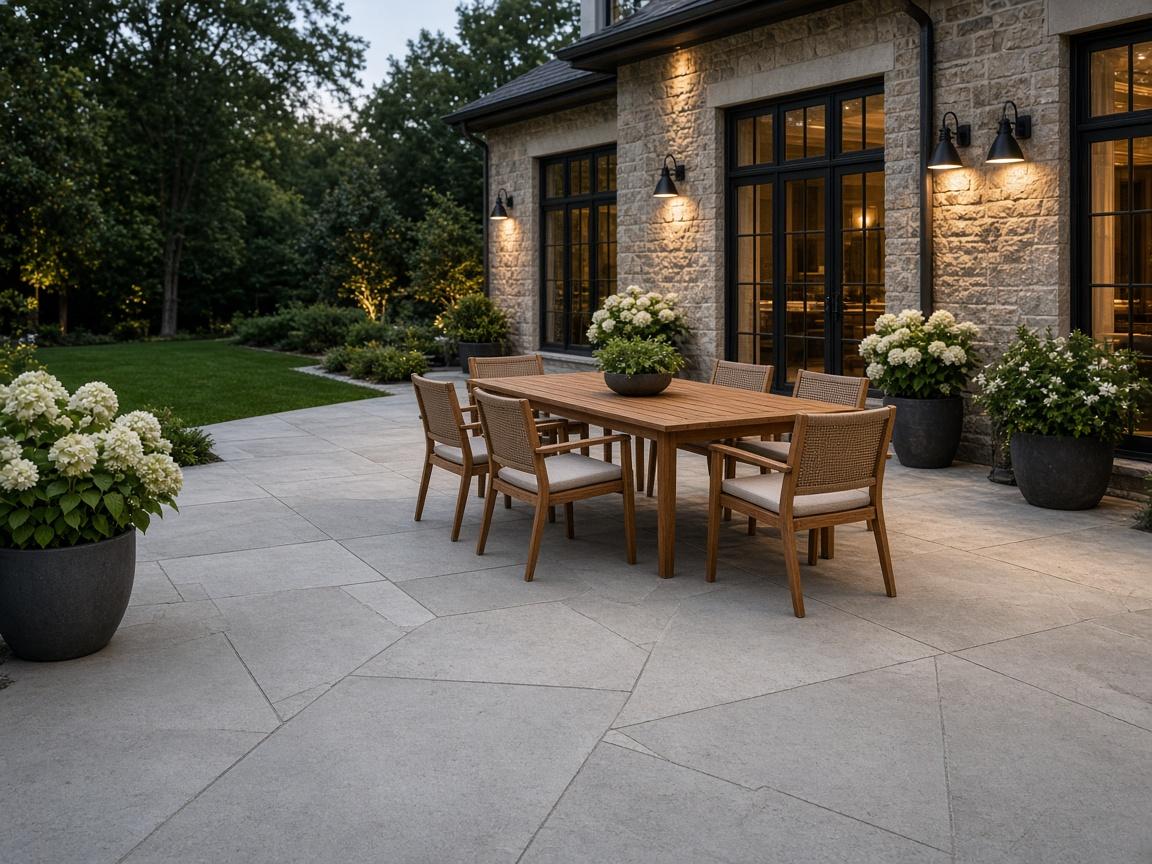
Concrete, stamped and decorative finishes, pavers, and natural stone—sized for how you entertain, graded to move water away from your home, and built on a base prepared for Rochester's freeze–thaw cycles.
Dining, lounging, cooking, and circulation zones are sized realistically so furniture fits and people can move around it.
Excavation, base material, and compaction suited to your soil and surface—where most long-term durability is won or lost.
Thoughtful grading and pitch protect your foundation and keep the patio from holding puddles or ice.
We can plan conduit, gas sleeves, footings, or heated zones now so a pergola, kitchen, or snow-melting system is easier later.
 Design inspiration
Overview
A good patio starts with how you actually spend time outside. Where does the evening sun land? How many people do you seat for dinner? Will a grill, fire feature, or pergola join the space later? We work through those questions first, then choose a surface, size, and shape that fit the house and the yard.
What you don't see matters just as much. Most patio problems—settling, cracking, heaving, standing water—trace back to soil preparation, base depth, drainage, and joint layout. Patio North plans those details up front and coordinates the work so the finished surface looks right on day one and keeps performing after many winters.
Whether you are adding a first patio, extending a builder-grade slab, or replacing a tired surface that has settled toward the foundation, we help you weigh the options honestly—including when a simpler material is the better choice.
Options
Clean, durable, and versatile. Broom, smooth-trowel, or exposed-aggregate finishes with deliberate saw-cut or tooled joint patterns that look intentional.
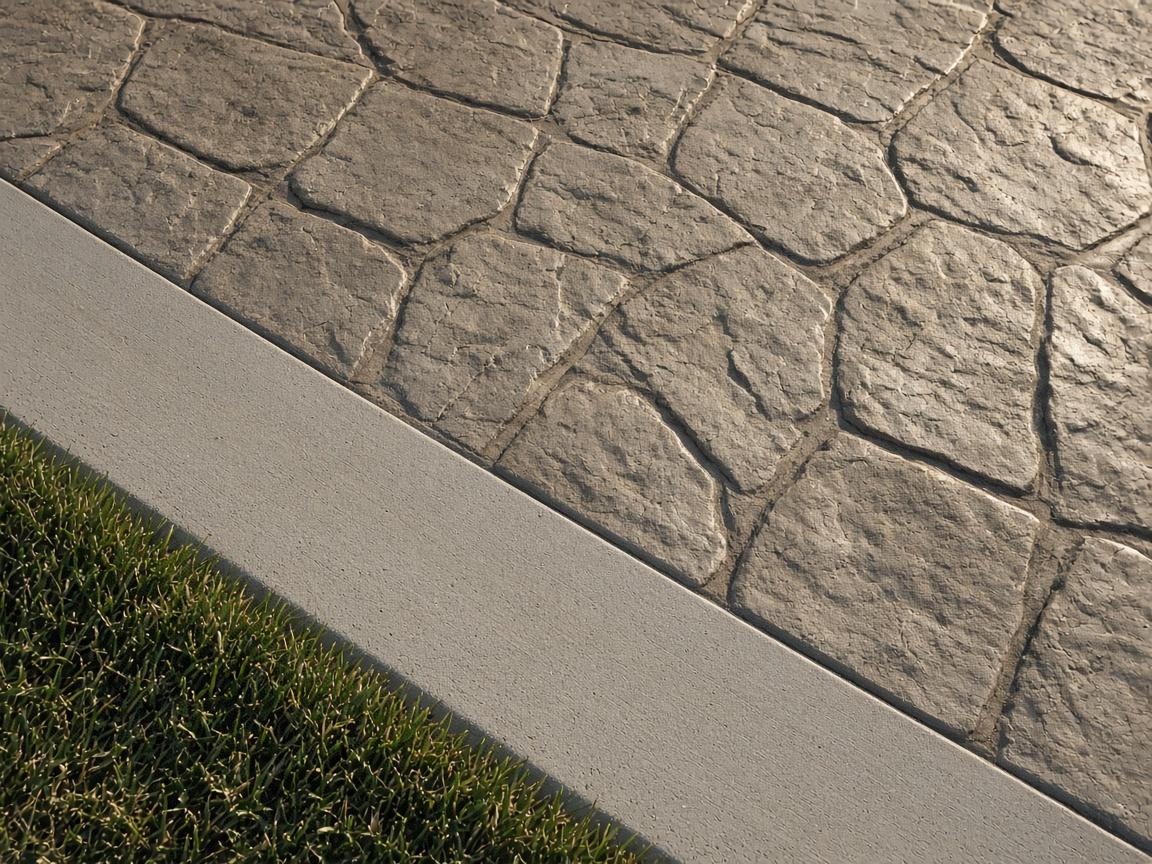
The texture of slate, stone, or wood plank in a continuous surface. Color is integral or broadcast, then sealed. Resealing periodically keeps it looking its best.
Integral color, stains, contrasting borders, and banding that tie a patio to your home's stone, siding, or trim.
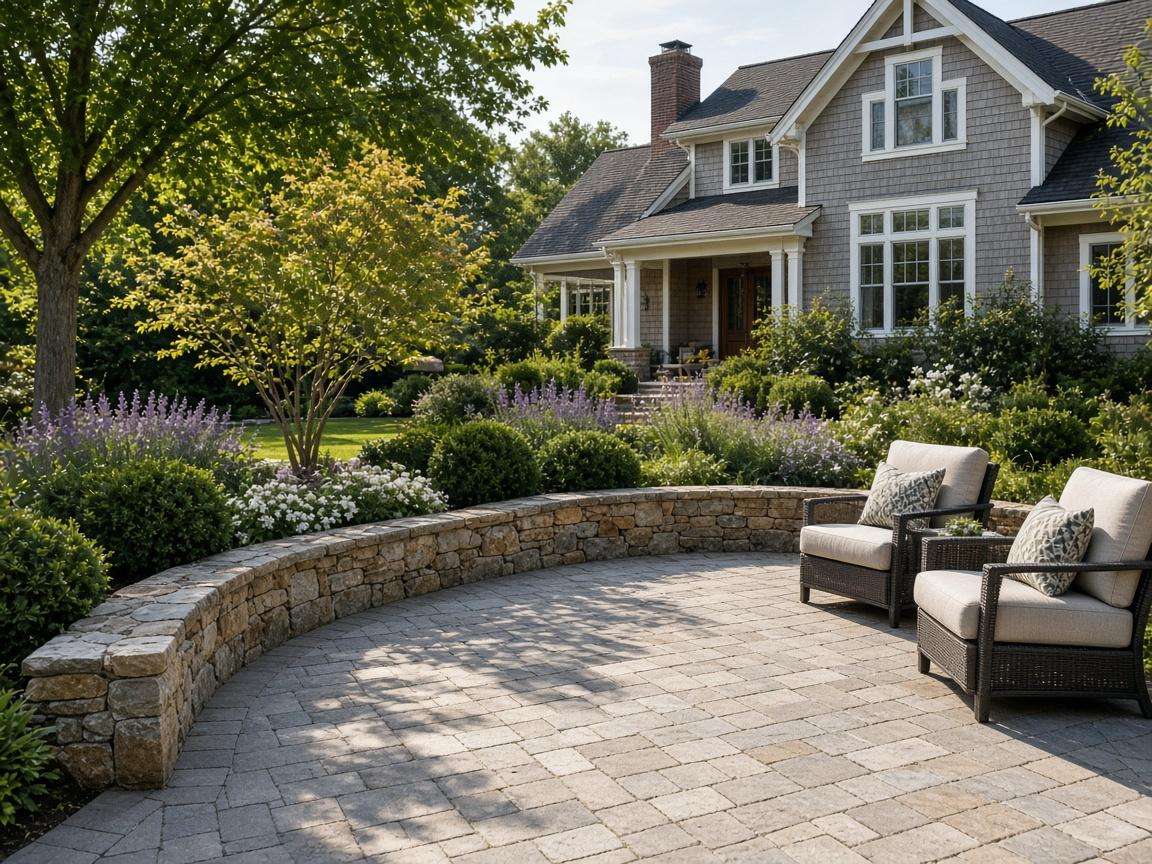
Modular concrete pavers in large-format, tumbled, or permeable styles. Individual units can be lifted and reset if repairs are ever needed.
Bluestone, flagstone, and other natural stone for a timeless, high-end look. Stone selection should account for freeze–thaw durability.
Expanding an existing patio with matching or deliberately contrasting materials, with careful attention to transitions and elevations.
Removing a cracked, settled, or poorly drained patio and rebuilding it correctly—often with a better layout than the original.
Proper pitch away from the house, and where needed, drains or swales so water has somewhere to go.
Comfortable step heights from doors and decks, landings, and level changes that make the patio feel connected to the house.
Planning
Removing organic soil, establishing a compacted granular base, and confirming that the subgrade is stable before any surface goes down.
Concrete shrinks and moves. Well-planned control joints guide cracking to straight, intentional lines instead of random ones.
The finished height at thresholds affects drainage, step comfort, and whether water ends up against your house.
Before excavation, underground utilities are located through New York's 811 one-call system, and private lines are identified where possible.
 Design inspiration
Rochester weather
Western New York winters do not just bring snow—they bring repeated freezing and thawing. Water that gets into or under a patio expands as it freezes, which is why base preparation, drainage, and material selection matter so much here.
Concrete is usually poured in the warmer months. When work runs into cold weather, it requires additional protection, so we plan schedules realistically rather than rushing a pour into conditions that compromise it.
Investment
We don't publish a price per square foot, because two patios of the same size can differ widely in cost. These are the factors that actually move a budget.
Sharing a budget range in the project planner helps us recommend a scope that fits.
Installation
We walk the property, look at grade and drainage, and talk through how you want to use the space.
Size, shape, elevations, and surface options, with a clear written scope and proposal.
Utilities located, soil excavated, and granular base installed and compacted to suit the design.
Forms, reinforcement, and joint planning for concrete; bedding and edge restraint for pavers and stone.
Concrete is placed, finished, jointed, and given time to cure before heavy use and sealing.
We review the finished work with you and explain sealing, cleaning, and winter care.
Both can perform well here when they're installed on a proper base. Stamped concrete gives a continuous surface with fewer joints and needs periodic resealing. Pavers have many joints but can be lifted and reset if an area settles. The right choice depends on your look, budget, and maintenance preferences.
Yes. A patio pitched toward the foundation is one of the most common reasons homeowners call. Replacement lets us correct the base and grading so water drains away from the house.
Light foot traffic is usually possible within a few days, while furniture and heavier loads should wait longer as the concrete gains strength. We'll give you specific guidance for your mix, finish, and weather conditions.
Often, yes. Planning footings, conduit, or sleeves during construction is far easier than cutting into a finished surface later. Tell us what you might add, and we'll plan for it.
Planning guides
Cost & Planning5 min read
Price-per-square-foot numbers rarely tell the whole story. Here's what really shapes a concrete patio budget in Western New York, and how to compare proposals.
Materials3 min read
Both can look beautiful and last for years in our climate. The better choice depends on the look you want, how you handle repairs, and how much maintenance you'll do.
Construction3 min read
Most patio failures come down to water. Here are the most common drainage problems we see, and how proper design prevents them.
Custom Patios
Share your ideas, your yard, and your timing, and we'll help you work out the right size, material, and next steps.
Discuss Your Patio