Heated Surfaces
Heated Patios: Electric vs. Hydronic Snow Melting
Both systems can keep patios, walkways, and driveways clear. The right choice depends on area, existing equipment, utility costs, and how you plan to use it.
By Patio North · · 4 min read
 Design inspiration
A snow-melting system turns a patio, walkway, or driveway into a surface that clears itself. For homeowners in Greater Rochester, where snow arrives often and ice lingers on steps and walks, that's a real quality-of-life upgrade.
There are two main types of embedded systems: electric and hydronic. Both can work very well. They differ in how they're installed, what they require from your home, and how they cost to own over time.
Embedded snow melting heats the surface to clear snow and ice. It's different from overhead patio heaters, which warm people sitting nearby. See fire features, heating, and lighting for comfort heating.
How electric snow melting works
Electric systems use heating cables or pre-spaced mats installed within or beneath the finished surface. When the controller calls for heat, electricity flows through the cables, warming the surface.
Where it tends to fit well:
- Walkways, steps, and entry landings
- Patios and smaller driveway areas such as aprons or tire tracks
- Projects where installing a boiler isn't practical
What it requires:
- Adequate electrical service capacity. Snow melting can be a significant load, and some homes need a dedicated circuit or a panel or service upgrade.
- Ground-fault protection appropriate for snow-melting equipment. In the National Electrical Code, fixed outdoor deicing and snow-melting equipment is addressed in its own article, and the work should be performed by a licensed electrician under permit.
- Careful handling during installation, since cables must not be damaged when the surface is placed.
Ownership: Electric systems have few moving parts and generally little routine maintenance beyond checking sensors and controls. Operating cost is driven by the heated area, how long the system runs, and your electricity rate.
How hydronic snow melting works
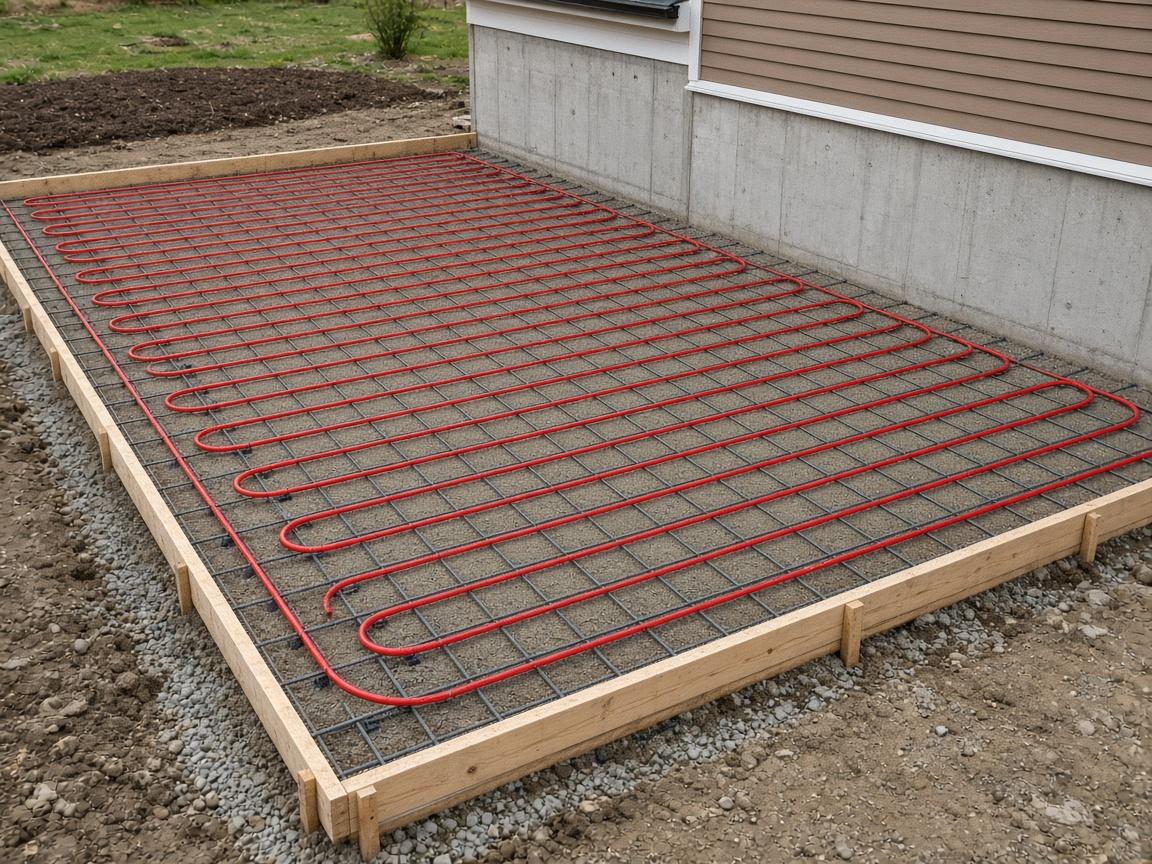
Hydronic systems circulate a heated fluid, typically a water and antifreeze mix, through tubing embedded beneath the surface. A heat source, usually a dedicated boiler, warms the fluid; pumps and manifolds distribute it to each zone.
Where it tends to fit well:
- Larger areas such as long driveways, big patios, and whole-property layouts
- Homes where a suitable heat source is planned, or new construction with mechanical space available
What it requires:
- A heat source sized for the area and the desired melting performance
- Pumps, manifolds, controls, and a place to house the equipment
- Mechanical work by qualified heating professionals
Ownership: Hydronic systems involve more equipment and therefore more maintenance, including service on the boiler and periodic checks of the fluid and pumps. On larger areas, they can be efficient to operate depending on fuel costs and equipment.
Comparing the two
| Electric | Hydronic | |
|---|---|---|
| Typical fit | Walks, steps, patios, smaller areas | Larger patios, long driveways |
| Upfront investment | Often lower on small projects | Generally higher, especially including the heat source |
| Equipment | Cables or mats, controller, sensors | Boiler, pumps, manifold, tubing, controls |
| Maintenance | Minimal | Routine mechanical service |
| Operating cost | Depends on electricity rates and run time | Depends on fuel cost, equipment efficiency, and run time |
There's no universal winner. A heated front walk and steps is often a natural fit for electric. A heated driveway, patio, and walkway system on a large property may justify hydronic.
Controls make a big difference
Both systems rely on controls to run efficiently:
- Aerial snow sensors detect precipitation and temperature and turn the system on when snow is falling.
- In-slab sensors sit in the surface and detect moisture and surface temperature directly.
- Idle settings can hold the surface slightly warm during cold periods so it responds faster when snow starts, at the cost of more run time.
- Zoning lets you prioritize steps and entries over larger areas.
Choosing a control strategy is a balance between how quickly you want surfaces cleared and what you're comfortable spending to operate the system.
Questions to ask before choosing
- Which areas matter most? Steps and the main entry usually come first.
- How large is the total heated area?
- Does your electrical service have capacity, or is an upgrade likely?
- Is there a practical place for hydronic equipment?
- Is this new construction or a retrofit? New construction is the easiest time to install either system. Learn more in how heated driveways and walkways work.
- Where will melt water drain?
Is snow melting right for every home?
No. Some properties don't have the electrical capacity without costly upgrades, some surfaces aren't good candidates for retrofit, and sometimes the budget is better spent elsewhere. A good design conversation should cover those tradeoffs openly.
If you're considering a heated patio, walkway, or driveway, start by deciding which areas matter most to you. From there, the right system usually becomes clear.
Find out if a heated surface fits your home.
Tell us which areas you'd like to keep clear, and we'll help you weigh electric and hydronic options.
Explore Heated Patios